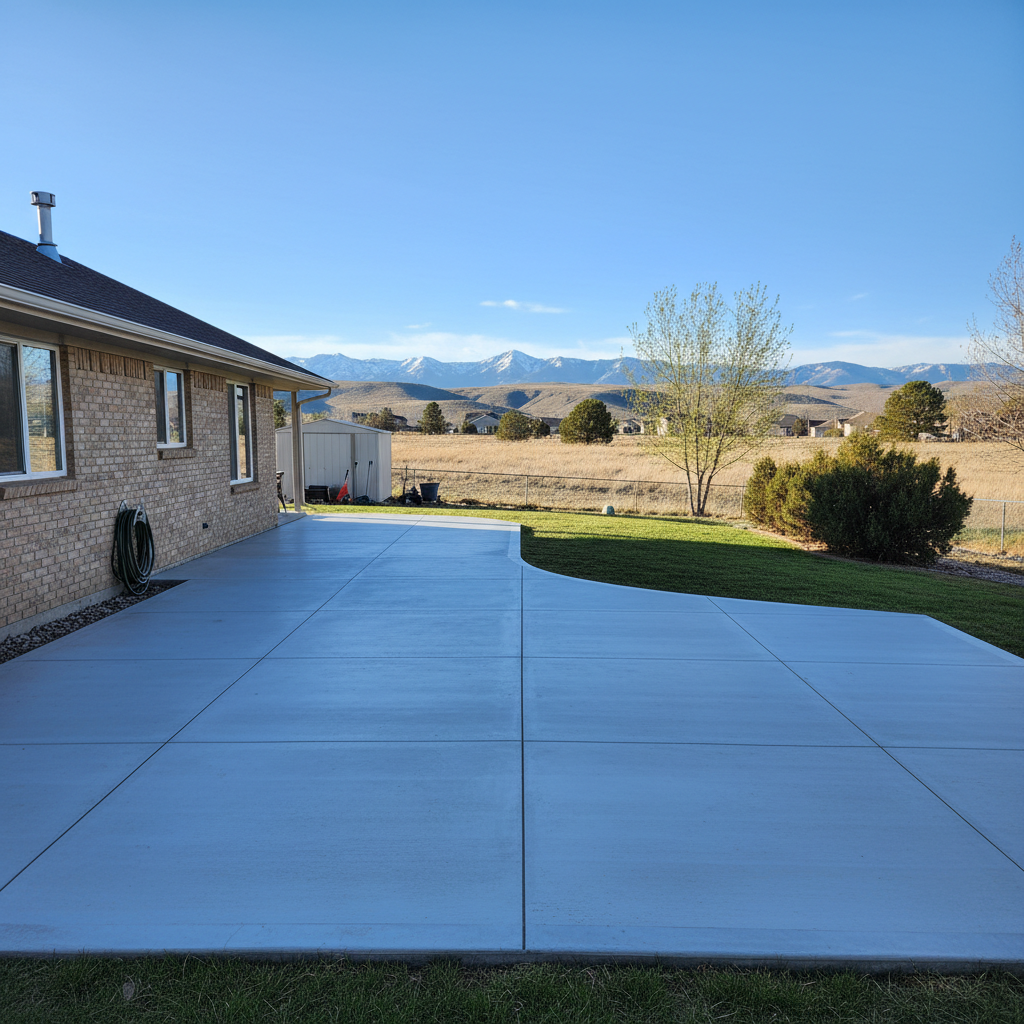
Let's talk about concrete costs here in Ogden. I get calls every day from folks wanting to know, "How much does a new driveway cost?" or "What's the price for a patio?" It's not a simple answer, but I can definitely give you the rundown on what you should expect and what factors really drive the price up or down.
What Affects Concrete Pricing?
There are a few big things that change the price tag on a concrete job. You gotta understand these before you even start thinking about numbers.
- Size and Thickness: This is pretty obvious, right? More square footage means more concrete, more labor, and more materials. But thickness matters too. A standard sidewalk might be 4 inches thick, but a heavy-duty driveway that's going to see big trucks? That needs to be 6 inches, maybe even 8 in some commercial spots. Thicker concrete uses more material and takes more work to pour and finish.
- Type of Concrete and Finish: Plain gray concrete is the most affordable. If you want something fancy like stamped concrete (to look like stone or brick), colored concrete, or exposed aggregate, that's going to cost more. These finishes require special materials, more skilled labor, and more time. A broom finish is standard and durable, but a smooth trowel finish takes more effort.
- Site Preparation: This is huge. If your yard needs a lot of grading, excavation, or removal of old concrete, that adds to the cost. We might need to bring in fill dirt to get the right base. Good site prep is non-negotiable for a long-lasting slab, so don't skimp here.
- Accessibility: Can we get our trucks and equipment right up to the pour site? If we have to pump concrete a long distance, or wheelbarrow it around the back of your house, that's extra labor and potentially a concrete pump rental, which adds to the bill.
- Reinforcement: Most concrete needs some kind of reinforcement to prevent cracking and increase its strength. This could be rebar, wire mesh, or fiber mesh. The type and amount needed will vary based on the application and local codes.
- Permits and Inspections: For larger jobs, especially driveways that connect to city streets, you might need permits from Ogden City. These have fees and require inspections, which are built into the project cost.
Typical Price Ranges in Ogden
Alright, let's get down to some real numbers. Keep in mind these are ranges, and your specific project could be higher or lower depending on those factors I just mentioned. These prices usually include excavation, base prep, concrete, reinforcement, and a standard broom finish.
- Driveways: For a standard 4-inch thick concrete driveway, you're generally looking at $7 to $12 per square foot. If you're talking about a larger, more complex driveway with thicker concrete or decorative finishes, that can push it to $12-$20+ per square foot. A typical two-car driveway might be 400-600 square feet, so you can do the math there.
- Patios: Patios are often similar to driveways in cost, maybe a little less if they're simpler. Expect $8 to $15 per square foot for a basic patio. If you want stamped or colored concrete, you're easily looking at $15 to $25+ per square foot.
- Walkways/Sidewalks: These are usually smaller and simpler. For a 4-inch thick walkway, you're probably in the $7 to $12 per square foot range.
- Slabs (for sheds, AC units): Smaller, simpler slabs can sometimes be a bit more per square foot due to minimum project costs, but generally fall into the $8 to $15 range for basic gray concrete.
So, for a 500 sq ft driveway, a basic job might be $3,500 to $6,000. A fancy stamped patio of the same size could be $7,500 to $12,500 or more. Remember, these are just estimates, and every job is unique.
What's Included in a Sunrise Concrete Quote?
When you get a quote from us, or any reputable contractor, it should be detailed. Here's what we typically include:
- Material Costs: Concrete, rebar/mesh, base material (gravel), form lumber.
- Labor Costs: For excavation, forming, pouring, finishing, and cleanup.
- Equipment Rental: If special equipment like a bobcat, concrete pump, or larger excavators are needed.
- Disposal Fees: For hauling away old concrete or excess dirt.
- Permit Fees: If applicable for your project.
- Insurance and Overhead: This covers our business insurance, workers' comp, and general operating costs. It's how we stay in business and protect you.
A good quote won't just be a single number. It'll break down these line items or at least explain what's covered. If it's just a handshake and a number, be wary.
How to Avoid Overpaying
Nobody wants to get ripped off. Here's my advice:
- Get Multiple Bids: Don't just go with the first guy. Get at least three detailed quotes. This helps you compare apples to apples and understand the market rate.
- Check References and Reviews: Look at their past work. Talk to previous customers. A good contractor will have plenty of happy clients.
- Ask for a Detailed Contract: Make sure everything is in writing. What's the scope of work? What's the timeline? What are the payment terms? What kind of warranty do they offer?
- Don't Always Go for the Lowest Bid: The cheapest bid often means they're cutting corners somewhere. Maybe they're using less rebar, thinner concrete, or skipping proper base prep. You want quality work that lasts, especially with our freeze-thaw cycles here in Ogden. A cheap job now can be a very expensive repair later.
- Understand the Scope: Make sure you and the contractor are on the same page about exactly what's being done. No surprises.
Concrete is a big investment, and you want it done right. It's not just about the upfront cost; it's about the longevity and durability of the work. If you've got questions about a specific project or need a quote, give us a call at Sunrise Concrete. We're always happy to chat about what you need.