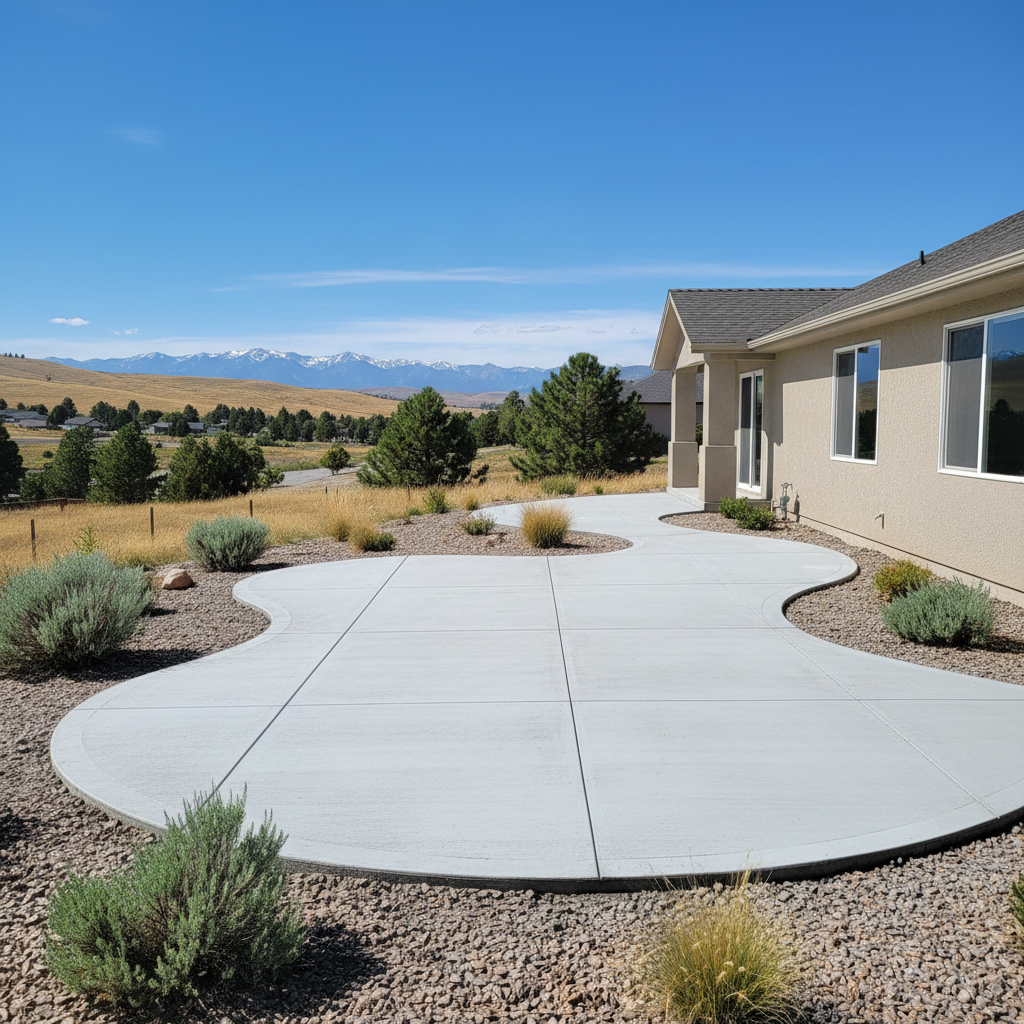
What Really Affects Your Concrete Project's Price Tag?
So, you're looking to pour some new concrete, maybe a driveway, a patio, or a walkway. First thing on your mind is probably, "How much is this gonna set me back?" It's a fair question, and honestly, it's not a simple answer. There are a bunch of things that push the price up or down, and if you don't know what they are, you could end up paying too much or getting a crummy job.
The biggest factor is usually the size and thickness of the slab. More square footage means more material, more labor, and more time. Simple math, right? But thickness matters too. A standard 4-inch sidewalk is cheaper per square foot than a 6-inch heavy-duty driveway designed for RVs or commercial vehicles. You're talking about a significant increase in concrete volume and the rebar or mesh needed to reinforce it.
Site preparation is another huge one. Is the ground already level? Or do we need to excavate a foot of old, broken concrete and haul it away? Are there tree roots to deal with? Is the soil stable, or do we need to bring in and compact a bunch of gravel for a proper base? Down here in Ogden, especially in some of the older neighborhoods like the East Bench, you can run into all sorts of surprises once you start digging, from rocky soil to old foundations. All that extra work adds to the bill.
Then there's the type of concrete and finish. Plain gray broom-finish concrete is the most affordable. Want exposed aggregate? Stamped concrete? Colored concrete? Each of those adds complexity, specialized materials, and more skilled labor, which means a higher price per square foot. A decorative patio with multiple colors and intricate stamping could easily be double the cost of a basic slab.
Finally, access to the site plays a role. Can a concrete truck back right up to where we're pouring? Or do we need to pump the concrete over a fence, through a narrow gate, or around the back of your house? Concrete pumps are fantastic, but they're an extra piece of equipment and an extra operator, and that costs money.
Typical Price Ranges for Concrete in Ogden
Alright, let's get down to some numbers. These are general ranges, and remember, every job is unique, but this should give you a good idea of what to expect for standard projects around Ogden.
- Basic Broom-Finish Concrete (Driveways, Patios, Walkways): For a standard 4-inch thick slab on a well-prepped site, you're generally looking at $7 to $10 per square foot. This includes excavation (if minor), base prep, forming, rebar/mesh, concrete, and a broom finish.
- Exposed Aggregate Concrete: This is a step up in looks and price. Expect to pay anywhere from $10 to $15 per square foot. It's more labor-intensive to get that perfect exposed stone look.
- Stamped Concrete: This is where prices really start to vary based on the pattern and colors. For a good quality stamped concrete job, you'll typically see prices between $12 and $20 per square foot. Complex patterns, multiple colors, and intricate borders will push you towards the higher end.
- Concrete Removal and Hauling: If you've got old concrete that needs to go, budget an additional $2 to $4 per square foot for removal and disposal. This can really add up on a big driveway.
So, for a typical 500 sq ft driveway, a basic broom finish might run you $3,500 to $5,000. That same driveway in stamped concrete could be $6,000 to $10,000. See how quickly it changes?
What Should Be Included in Your Concrete Quote?
When you get a quote from a contractor, don't just look at the bottom line. You need to know exactly what you're paying for. A good quote from a company like Sunrise Concrete should break down the project clearly. Here's what you should expect to see:
- Scope of Work: A clear description of what's being done. Is it a new pour? A replacement? What are the dimensions?
- Site Preparation: Details on excavation, grading, and base material (e.g., 4 inches of compacted gravel).
- Materials: Type of concrete (e.g., 4000 PSI, 6-sack mix), thickness (e.g., 4 inches, 6 inches), and reinforcement (e.g., #3 rebar on 24-inch centers, 6x6 WWM mesh).
- Finish: What kind of finish will it have? Broom, smooth, exposed aggregate, stamped pattern and color.
- Expansion/Control Joints: How and where these will be placed to prevent cracking.
- Cleanup and Disposal: Confirmation that they'll clean up the site and haul away debris.
- Warranty: What kind of guarantee do they offer on their work?
- Permits: Who is responsible for pulling any necessary permits? (Usually the contractor, but always confirm.)
If a quote is just a single number with no details, that's a red flag. You want transparency.
How to Avoid Overpaying for Concrete
Nobody wants to get ripped off, especially when you're investing in something as permanent as concrete. Here's my advice:
- Get Multiple Bids: This is Concrete 101. Get at least three detailed quotes from different reputable contractors. Don't just go with the cheapest; compare what's included.
- Check References and Reviews: A contractor can tell you anything, but what do their past customers say? Look for reviews on Google, Yelp, or ask for direct references.
- Verify Licensing and Insurance: In Utah, contractors need to be licensed. Make sure they have general liability insurance and workers' comp. If they don't, and someone gets hurt on your property, you could be liable.
- Don't Pay Upfront: A reputable contractor won't ask for 50% or more upfront. A reasonable deposit (10-25%) to cover material costs is fine, but the bulk of payment should be due upon satisfactory completion.
- Be Specific About What You Want: The more detailed you are about your vision, the more accurate the quote will be. Don't change your mind halfway through the job without expecting a change order and an adjusted price.
- Understand the Contract: Read every line. If you don't understand something, ask. Don't sign anything you're not comfortable with.
Concrete is a long-term investment in your property. Do your homework, ask the right questions, and don't rush into a decision. You'll be glad you did when you've got a beautiful, durable slab that lasts for decades.