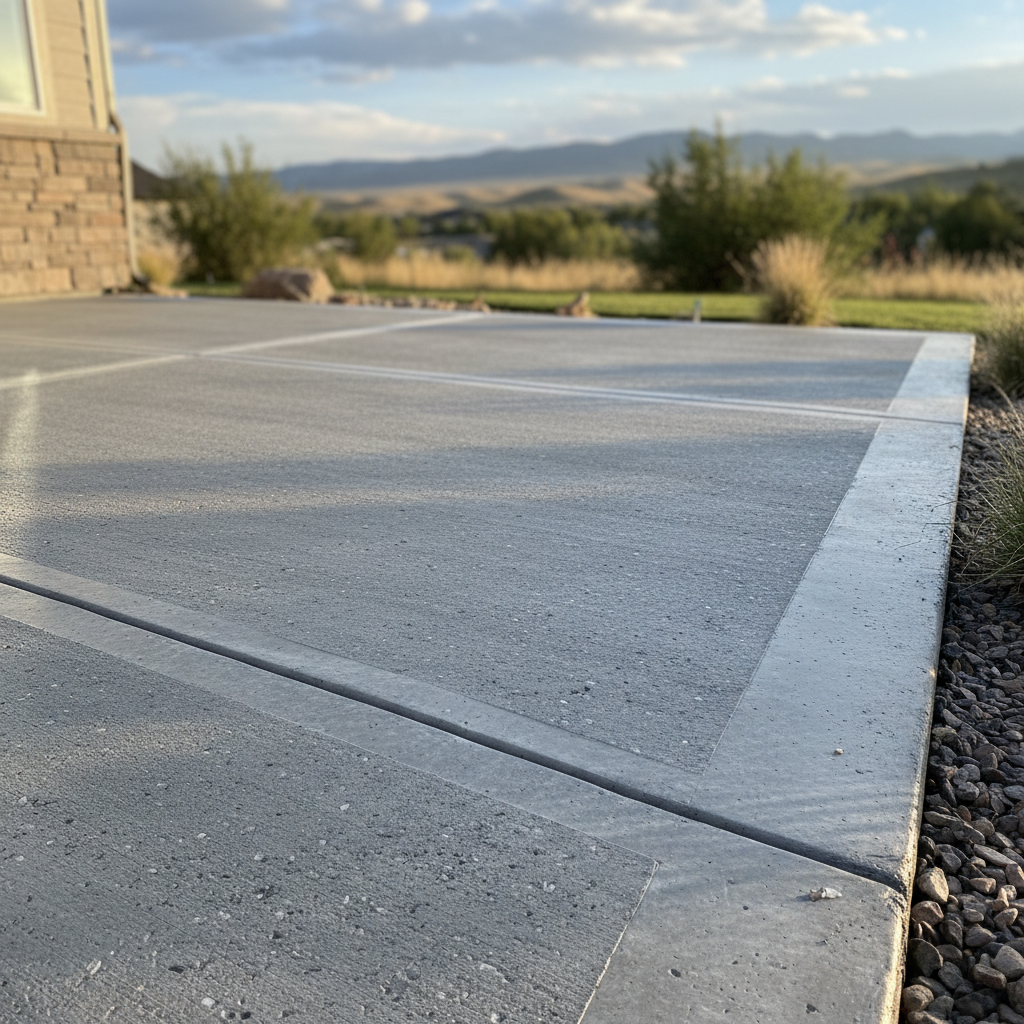
Alright, let's talk concrete patios. Folks around Ogden ask me a lot of questions about upgrading their backyard, and honestly, that's a smart move. A good patio can totally change how you use your outdoor living space. But there's a ton of information out there, and not all of it's actually helpful. So, I've gathered up the most common questions I hear, and I'm going to give you the straight answers. No fluff, just the stuff you really need to know.
How long does a concrete patio actually last in our Ogden climate?
This is a big one, and it's a fair question, especially with our wild weather swings here in Ogden. We get hot summers, freezing winters, and plenty of freeze-thaw cycles. A properly installed concrete patio — I mean, done right with the correct mix and good sub-base prep — should easily last you 20 to 30 years. I've even seen some go longer. The key, though, is that "properly installed" part. If corners are cut, especially on the base or the concrete's air entrainment (that's what helps it resist freezing), you'll see issues much, much sooner. But with quality work, it's a solid, long-term investment.
What's the deal with drainage? Do I really need to worry about it?
You absolutely need to worry about drainage. Maybe even more so in spots like the East Bench where you've got slopes. Water is concrete's enemy if it's just sitting on it or, worse, getting underneath it. A good patio needs a slight slope, usually about 1/8 to 1/4 inch per foot, to push water away from your house's foundation and off the slab. We always plan this out before we even think about pouring. If water pools on your patio, it can lead to staining, moss growth, and in winter, it'll freeze and expand, which can cause cracking. Seriously, don't skip thinking about where that water's going to go.
Can I pour a new patio over an existing, old concrete slab?
Short answer: usually not a good idea. Long answer: it's tempting to save a few bucks by just pouring over the old stuff, but you're basically inheriting all the problems of that old slab. If it's cracked, heaving, or settled, those issues are going to show right through your new concrete. Plus, you're adding a lot of weight, which can cause even more settlement. You also run into height issues with doorways and steps, which is a pain. Most of the time, it's better to demo the old slab, prepare a fresh sub-base, and pour new. It's more work upfront, sure, but it saves you headaches and money down the road.
What kind of maintenance does a concrete patio need?
Concrete patios are pretty low-maintenance, which is one of their big selling points. You'll want to clean it periodically, especially after pollen season or if you spill something. A good power wash once a year can do wonders. The most important thing, though, is sealing it. I recommend sealing your patio every 2-5 years, depending on the sealer type and how much sun and weather it gets. This protects it from stains, moisture, and those freeze-thaw cycles we talked about. Think of it like sunscreen for your patio – keeps it looking good and lasting longer.
How long until I can actually use my new patio?
You're excited, I get it! You can usually walk on a new concrete patio within 24-48 hours. But "use" is a different story. For light furniture and foot traffic, give it about 3-7 days. For heavy furniture, grills, or anything that puts significant weight on it, you really want to wait the full 28 days for the concrete to reach its full strength. It cures over time, and rushing it can lead to surface damage. Patience is a virtue here; you've waited this long, a few more weeks won't kill ya.
What's the difference between stamped concrete and regular broom-finish concrete?
Okay, so "regular" concrete usually means a broom finish – it's got that slightly rough texture for grip. It's functional, durable, and cost-effective. Stamped concrete, on the other hand, is all about aesthetics. We press patterns into the wet concrete to mimic stone, brick, wood, or other textures, and then we often color it. It looks fantastic and can really elevate your outdoor space. The main differences are cost (stamped is more expensive because of the extra labor and materials) and the look. Both are strong, but stamped gives you that custom, high-end feel. It's a choice between function and flair, really.
When's the best time of year to pour a concrete patio in Ogden?
Generally, spring and fall are ideal here. You want temperatures that are consistently above freezing but not scorching hot. Think 40-70 degrees Fahrenheit. In the spring, after the last hard freeze, the ground is usually stable, and the milder temps let the concrete cure slowly and evenly, which makes for stronger concrete. Fall is also great, before the ground freezes solid. Pouring in the dead of summer when it's 95 degrees means the concrete cures too fast, which can lead to more cracking. And winter? Forget about it unless you've got special heaters and enclosures, which adds a ton to the cost. We at Sunrise Concrete always aim for those sweet spots in the spring and fall for the best results.