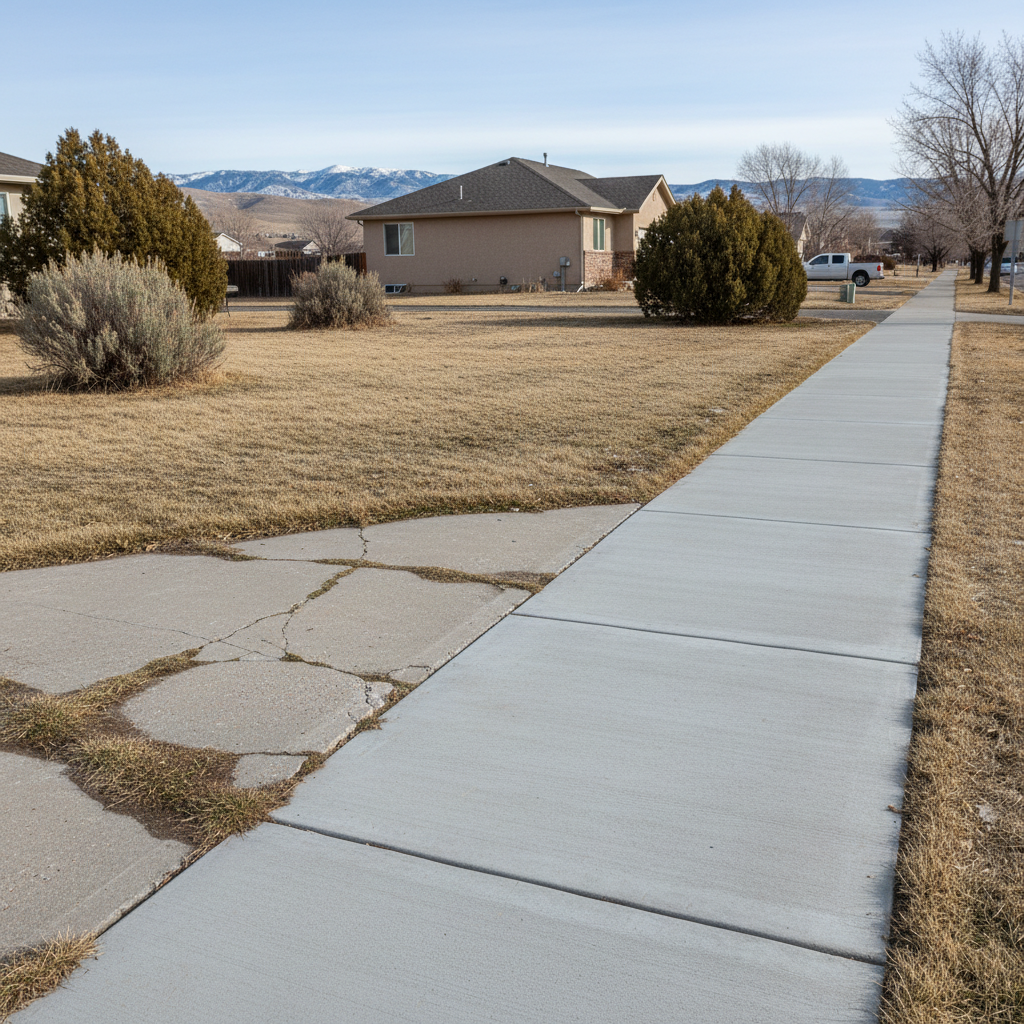
Thinking about a new sidewalk? Maybe you're replacing an old, cracked one, or perhaps you want to put in a path where there wasn't one before. That's a good idea. A solid, good-looking sidewalk really boosts curb appeal and makes your property safer, doesn't it? But then you hit a crossroads: should you go with classic poured concrete, or are those interlocking pavers a better bet?
I get this question all the time from folks around Ogden. There's no single perfect answer, but I can tell you what I've seen work and what definitely doesn't, especially with our unique climate and soil conditions here in the valley.
Poured Concrete Sidewalks: The Old Reliable
When most people picture a sidewalk, they're probably thinking of poured concrete. It's everywhere you look, from the historic districts downtown to the newer developments up on the East Bench. And there's a really good reason for that: it's dependable.
- Cost: Generally, poured concrete will be your more budget-friendly option right off the bat. It's quicker for a professional crew like mine at Sunrise Concrete to install, so labor costs usually end up lower. You're basically paying for the material, the site prep, and the pour itself.
- Durability: A well-poured, properly cured concrete sidewalk can easily last for decades. We're talking 30-50 years, no problem, if someone does it right and you keep up with basic maintenance. It's a solid slab, so it handles heavy foot traffic and even light vehicle traffic (if it's designed for that) without much fuss. The trick, though, is making sure the base is good and that it has control joints to manage cracking.
- Maintenance: Pretty low, honestly. Keep it clean, maybe seal it every few years to protect against our harsh winters and the freeze-thaw cycles we get here. If a section cracks badly, you might need to patch it or replace a slab, but usually, it's a "set it and forget it" kind of deal.
- Appearance: It's a classic look. You can get different finishes – a broom finish for traction, or a smooth trowel for something sleeker. It's uniform, which some folks prefer. You can also add color or even stamp it to mimic other materials, but then you're getting into decorative concrete, which changes the cost and complexity quite a bit. For a basic sidewalk, it's a clean, simple look.
The biggest challenge with poured concrete, especially here in Ogden, is dealing with our expansive clay soils and those big temperature swings. If the ground isn't prepped properly, or if you don't have enough control joints, you're going to see cracks. It's not a matter of 'if,' but 'when,' you know? Good drainage is super important too; you don't want water undermining it.
Concrete Pavers: The Flexible Alternative
Pavers have really taken off in popularity over the last couple of decades. They're individual units, usually made of concrete, that interlock to create a surface. You see them a lot in patios and driveways, but they make great sidewalks too.
- Cost: This is where pavers usually get pricier than poured concrete. The material itself costs more per square foot, and the installation is definitely more labor-intensive. Each paver has to be laid individually, and the base preparation is absolutely critical.
- Durability: Extremely durable. Because they're individual units, they can flex and move a little with ground shifts, which is a huge advantage in areas with unstable soils. If one paver gets damaged, you can replace just that one, instead of needing to demo and re-pour a whole section. They can handle heavy loads if installed correctly.
- Maintenance: Also pretty low, but different from poured concrete. You'll need to sweep sand into the joints periodically to keep them tight. Weeding can be an issue if you don't use polymeric sand or if it washes out. Like poured concrete, sealing helps protect them. If a paver breaks, you just pop it out and put a new one in.
- Appearance: This is where pavers really shine for a lot of people. You've got a massive range of colors, shapes, and patterns. You can create intricate designs, borders, and really customize the look to match your home's style. They offer a more textured, often more upscale, aesthetic than basic poured concrete.
The biggest thing with pavers is the base. You absolutely cannot skimp on the base preparation. If it's not compacted properly, or if the drainage isn't right, you'll get settling and uneven spots. And trust me, fixing a poorly installed paver sidewalk is a nightmare.
So, Which One Should You Choose?
Honestly, both are great options for a sidewalk, and both will last a long time if installed by someone who knows what they's doing. But if you're asking me for a recommendation for a typical Ogden homeowner, considering our climate and what I've seen over the years?
For a standard, reliable, and cost-effective sidewalk that just needs to get people from point A to point B, poured concrete is still my go-to recommendation. It's robust, requires minimal upkeep, and gives you a clean, classic look. Just make sure your contractor is experienced with our local conditions – they need to know about proper base compaction, rebar or fiber reinforcement, and adequate control joint spacing to handle our freeze-thaw cycles and sometimes finicky soils.
Now, if budget isn't your absolute top concern, and you're looking for something with more aesthetic flair, or if you've had issues with cracking in the past due to ground movement, then pavers become a really strong contender. The flexibility they offer against ground shifts is a big plus, and you can achieve some truly beautiful designs. Just be prepared for the higher initial cost and make sure your installer is a paver specialist.
Ultimately, it comes down to your priorities: budget, the look you want, and how much you want to think about it after it's installed. Both are solid choices, but knowing what you're getting into with each will help you make the right call for your home.