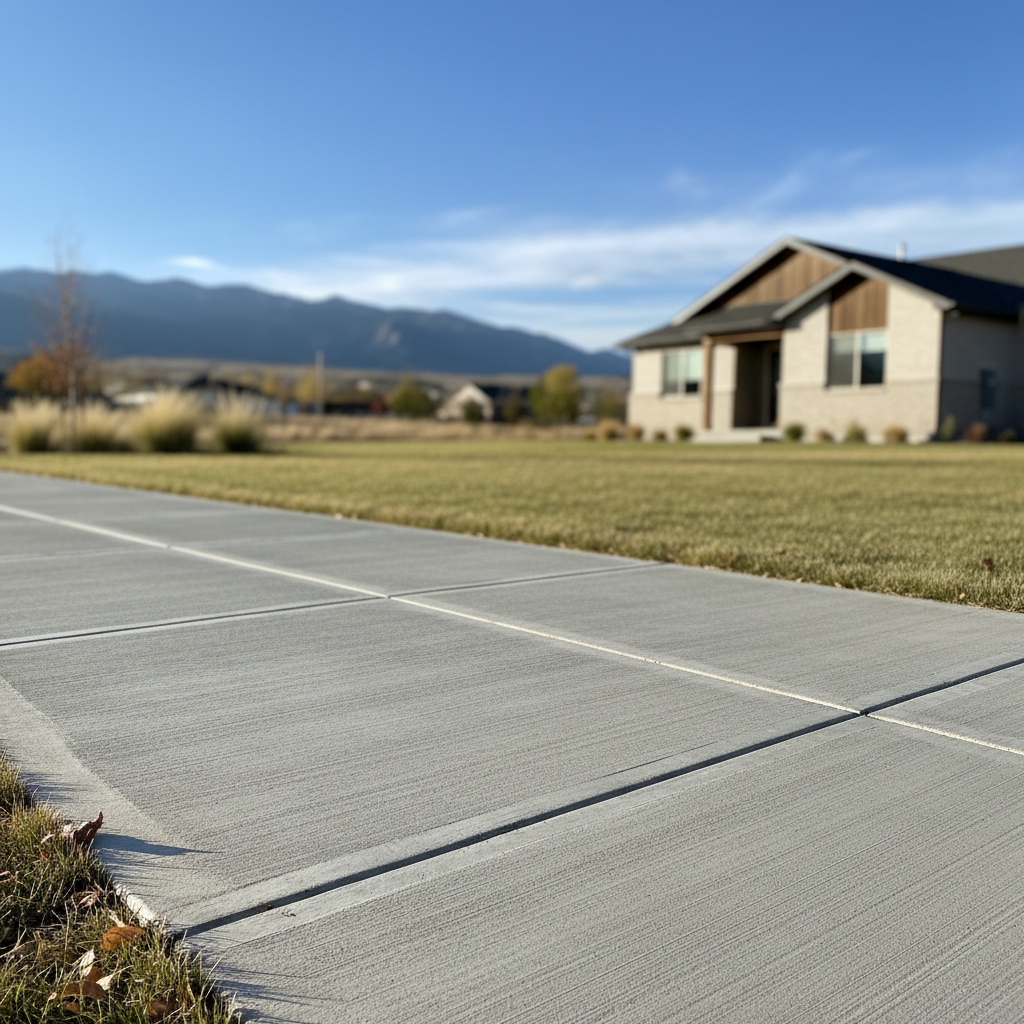
Why do concrete sidewalks crack, even new ones?
This is probably the most common question I get, and it's a good one. Concrete cracks. It's not a matter of if, but when and how much. There are a few main reasons. First, concrete shrinks as it dries and cures. We pour it wet, and as the water evaporates, the concrete pulls itself together, creating tension. If that tension isn't relieved, it cracks. That's why we put in control joints – those lines you see. They're not just for looks; they're meant to be the weak points where the concrete can crack predictably, usually out of sight below the surface.
Then there's the ground underneath. Here in Ogden, we deal with some pretty expansive clay soils in places, especially up closer to the bench. When that soil gets wet, it swells; when it dries, it shrinks. That movement can put a lot of stress on your sidewalk. Freeze-thaw cycles are also a big deal. Water gets into tiny cracks, freezes, expands, and pushes the concrete apart. It's a constant battle against Mother Nature, really. Good preparation of the subgrade and proper control joint placement are key to minimizing these issues, but you'll still see some hairline cracks over time. It's just the nature of the material.
How long should a concrete sidewalk last in Ogden?
A well-installed concrete sidewalk, done right from the start with proper subgrade prep, good quality concrete mix, and correct curing, should easily last you 20 to 30 years, maybe even more. I've seen sidewalks around older homes in the East Bench area that are 50+ years old and still holding up, though they've definitely seen better days. The lifespan really comes down to a few things: the quality of the initial work, how well it was maintained, and the amount of traffic it gets. If you've got heavy equipment driving over it regularly or don't clear snow and ice properly, you're going to shorten its life. But for a standard residential sidewalk, two to three decades is a reasonable expectation.
What's the difference between concrete repair and replacement?
This is where I often have to be the bearer of bad news, but I'll always be honest with you. Repair means fixing a specific problem, like filling a small crack, patching a spalled surface, or lifting a sunken slab. Replacement means tearing out the old concrete and pouring new. You'd go for repair if the damage is localized, minor, and hasn't compromised the structural integrity of the whole slab. For example, if you have a few hairline cracks or a small section that's chipped, we might be able to patch it or use a crack filler.
However, if you've got widespread cracking, significant heaving or settling that creates tripping hazards, or the concrete is crumbling and spalling over a large area, then replacement is almost always the better, long-term solution. Trying to patch extensive damage is often just putting a band-aid on a bigger problem, and you'll end up spending more in the long run. I always tell folks, if more than 25-30% of the surface is seriously damaged, it's probably time to think about a full tear-out and pour. It's an investment, but it's one that pays off in safety and curb appeal.
Can I just fix a sunken sidewalk section myself?
You can try, but honestly, it's usually not a lasting fix. For minor sinking, some folks try to shim it with gravel or sand, but that material tends to wash out over time, and you're back to where you started. There are also DIY concrete lifting kits, but they require a certain level of skill and specialized equipment to do right. If you're talking about a significant drop, say more than an inch or two, or if multiple sections are sinking, you're usually dealing with a subgrade issue that needs professional attention. We use techniques like mudjacking or polyjacking, where we inject material under the slab to lift it back into place. It's a precise process that requires specialized equipment and experience to avoid further damage. For safety and longevity, I'd recommend calling in a pro for anything beyond a very minor, cosmetic issue.
How do I prevent my sidewalk from cracking or spalling?
Prevention starts with good installation, as I mentioned. But once it's in, maintenance plays a big part. First, make sure water drains away from your sidewalk, not towards it. Standing water is concrete's enemy. Keep your gutters clean and make sure downspouts direct water away from the slab. Second, seal your concrete every few years. A good quality penetrating sealer will help protect against water absorption, which reduces freeze-thaw damage and chemical attack from de-icers. Third, be careful with de-icing salts. Calcium chloride and magnesium chloride are generally less damaging than rock salt (sodium chloride), but any salt can be tough on concrete over time. Use them sparingly, or consider sand for traction. And finally, don't let heavy loads sit or drive over your sidewalk if it wasn't designed for it. That's a surefire way to cause cracks.
What's the deal with those control joints? Do I need to seal them?
Control joints, also called saw cuts or expansion joints, are there for a reason: to control where the concrete cracks. They're designed to be weak points. As for sealing them, it's a good idea, especially if they're wide or deep. If you leave them open, water can get down into the subgrade, which can lead to erosion, freezing and thawing issues, and ultimately, more movement and damage to your sidewalk. Sealing those joints with a flexible, durable sealant helps keep water out and prevents weeds from growing up through them. It's a small step that can make a big difference in the longevity of your sidewalk. We do this as part of our service at Sunrise Concrete, but it's something you can do yourself too if you're handy.
When is the best time of year to pour a new concrete sidewalk in Ogden?
Here in Ogden, the ideal time to pour concrete is typically in the spring or fall. You want temperatures that are consistently above freezing but not excessively hot. Spring, say April through June, is great because the ground has thawed, and you usually have moderate temperatures. Fall, from September into early November, is also excellent for similar reasons. What we try to avoid are the dead of winter, when freezing temperatures can wreak havoc on curing concrete, and the peak of summer, when it's super hot. High heat can cause the concrete to dry too quickly, leading to rapid shrinkage and a higher chance of cracking. We can pour in summer, but it requires more precautions like misting and shading to ensure proper curing. So, if you have the flexibility, aim for those shoulder seasons.